The Immortal and the Antihero

“Is Buffy home yet?”

Antiheroes are sexy. They are roguish free spirits that take what they want, live for themselves, and always come out on top. They are unshackled by the chains of morality, and they don’t spout some crotchety evil agenda to everyone within earshot. At least, that’s how writers want you to see antiheroes. Antiheroes tend to be a lot of things, but mostly they are just stupid. I’m not saying the antihero as a concept is stupid, I am saying that how they have been portrayed has generally been ridiculous. People who do whatever they want without regard for any guiding principles are just assholes. When you slap on the moniker of “antihero”, they suddenly become acceptable as heroic figures, with assassins (people that murder for cash) often being portrayed as agents of justice. One of the things that made Breaking Bad so amazing was its ability to see through that bullshit. Walter White did the things most antiheroes are known for; he acted selfishly (as much as he’d like to deny it) and thought mostly of himself. Yet there was nothing glossy about the whole enterprise and the audience knew that because of how ugly things got for Walt by the end. While Breaking Bad’s Walter White taught us the ugly truth about antiheroes, Angel‘s “The Immortal” taught us to laugh at them.

Continue reading “The Immortal and the Antihero”

Lost in a Pigeonhole: Where The Mentalist Went Wrong

The Mentalist is another in a long line of procedural dramas that mixes in serialized elements. Meaning, it has the usual “case-of-the-week” structure going, but it also puts in little pieces of a large overarching story-arc to go along with it. With The Mentalist specifically, we’d often get a a slew of random cases to solve, but every once in a while we’d get a case that would progress the show’s central mystery, and that would be catching Red John.

Continue reading “Lost in a Pigeonhole: Where The Mentalist Went Wrong”

No Schnitzel Sherlock: Three Dumb Things That Happened in the Finale

Fair warning to those reading, this post will contain a metric ton of spoilers on the third season (or series as it’s called here for some reason) of Sherlock. In it, I will discuss three absurdly stupid things that happened. If this sounds to you like it’s going to be an angry rant from some nerd who cares way too much about British TV shows, well congratulations on cracking the case there buddy, did Scoobs help you out with that one?

Did you enjoy that condescending tone I just addressed you with? Would it be more acceptable if I was British, played by a guy with an exceptionally dirty last name, and talked extremely quickly? No? Well that’s who you’re left with in BBC’s Sherlock. He’s rude, he’s annoying, he has zero emotional intelligence, but at least he’s  good at what he does right? At least he’s competent? He pretty much has to be, because otherwise, he’s just some arrogant tool that spouts nonsense… And that is exactly what he became in that dreadful finale. Here are 3 reasons why.

Continue reading “No Schnitzel Sherlock: Three Dumb Things That Happened in the Finale”

Breaking Bleak: How Breaking Bad Managed to be so Good

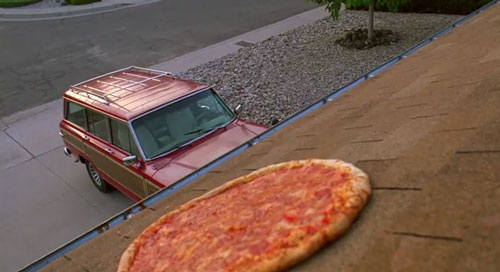
The infamous pizza on the roof was one of Heisenberg’s first victims…

The popular perception of Breaking Bad‘s protagonist Walter White is that he is a stone cold bad ass anti-hero with a murderous persona dubbed “Heisenberg” to match. That he is a calculating criminal mastermind that could erase a man on a whim by the fifth season. While there is definitely some truth to those sentiments, at his core, Walter White is a bit of a joke. A character who is easily capable of ringing as many laughs from a person as Bryan Cranston’s other famous role as Hal from Malcolm in the Middle. He is a terrible liar, an even worse criminal (that would leave incriminating evidence in the bathroom his DEA agent brother-in-law frequents), and is hypocritical to the point of often coming off as pathetic. Something to perfectly encapsulate Walt at his core is the often forgotten scene of him squeamishly backtracking on his famous “I am the one who knocks” speech by the end of the same episode he said it to his frustrated wife, uttering “I may have overstated things earlier and I’m sorry to be so forward” in a pitiful attempt to alleviate her fears on the safety of her children. That is Walter White, a man who says things with no true meaning in them and is fueled by his petty attempts at rebuilding his pride. Because of that, Breaking Bad is a world where we can laugh at his transparency and his naked attempts at recognition, and as a result, I feel the show had truly pushed itself into greatness.

Continue reading “Breaking Bleak: How Breaking Bad Managed to be so Good”