Parks and Recreation Season 1 was a Show About Terrible People

People today know Parks and Recreation as this funny sitcom with a lot of warmth and heart about really distinct and likable characters. Sometimes they veer too far into caricature territory, but they are always grounded by the huge amount of chemistry they share. The show is just so good-natured and lovable, which is appropriate because it’s a show about people working in a city government parks and recreation department. It’s now going into it’s 7th and finale season after coming off a fantastic 6th season finale (that could have honestly made a satisfying series finale), but now that we’ve come so far it’s important to think about how these characters have changed. Thinking back, Parks and Recreation was very different in its first season. Most shows take some time to find themselves, but this one essentially had to reinvent itself after a shaky start. The reason this is the case was that the cast back then was pretty much unlikable for the most part. To illustrate this, I’d like to compare the differences between how they are now and how they were back then. Here’s what we know of the cast now:

Continue reading “Parks and Recreation Season 1 was a Show About Terrible People”

Masahiro Sakurai: The Control Freak Smash Bros. Mastermind

“Have you ever made a game?”

Masahiro Sakurai is the mastermind behind Smash Bros. who is also known for creating the Kirby franchise. He has overseen the development for every Smash Bros. game to date and is known to be heavily involved with every detail of the creation of his games… and by that I mean he is a total control freak. Now I’m not saying this to insult him or put down his work, his games have all been excellent for the most part (Kid Icarus: Uprising was fantastic for example), but he is definitely your textbook control freak. A lot of what we see in Smash Bros. is a direct reflection of what goes on in Sakurai’s mind. This is probably why he’s almost like a cult personality among Smash fans, with countless people either worshiping him over the internet or fearing him like an angry God who can do the worst thing imaginable to them. Because Sakurai is the face of Smash Bros. people have come to love him or despise him to the core.

Continue reading “Masahiro Sakurai: The Control Freak Smash Bros. Mastermind”

Musings on Smash

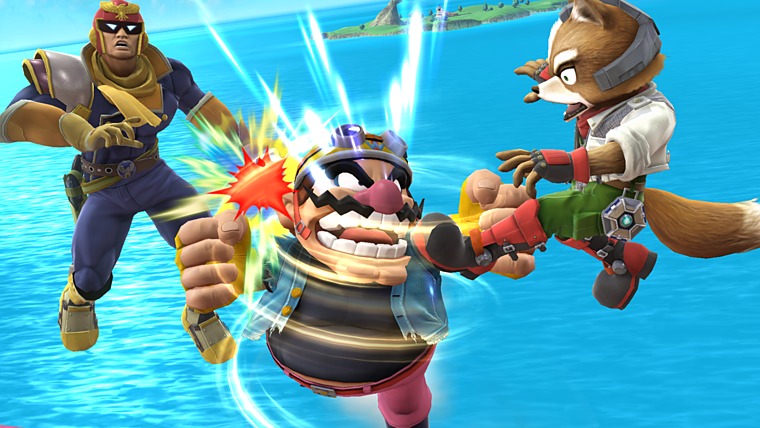
Wario showing these fools who’s boss

Smash Bros. for the Wii U is finally out so there is so much for me to be happy about today. Smash Bros. (1999) was my childhood! And Super Smash Bros Melee (2002) was my formative years! And Super Smash Bros. Brawl (2008) was my adolescence! I wonder where the newest entry into the franchise will fall in with my life? I don’t know what else to say other than I’m super excited to finally play this.

Something you should know is that Smash Bros. is often a centre of debate for a lot of people out there.

Continue reading “Musings on Smash”

The Big Bang Theory’s Sheldon Cooper is a Joke on the Audience

Pictured: The star of The Big Bang Theory desperately pleading for pants… and laughs.

Sheldon Cooper isn’t funny. The breakout usurper star of the immensely popular sitcom, The Big Bang Theory, who is quickly becoming a popcultural icon on the level of “The Fonz” of Happy Days and Steve Urkel of Family Matters (other stars who usurped the lead role from fellow cast mates due to their popularity) is mostly just a loathsome and ignorant person. It’s not that you can’t be those things and funny, but Sheldon’s particular brand of awfulness has gotten sour as of late. Before, Sheldon was merely selfish and believably unfamiliar with social cues, much like an overgrown child. Now that selfishness and obliviousness has rotted into this odd streak of maliciousness and willful ignorance of even the most basic social conventions. The way he treats his friends, his girlfriend, and his colleagues has gone past “funny” and moved firmly into insufferable territory. The worst part of his character is how the writers try to convince us that Sheldon is a decent person “deep down” and just doesn’t know how to show it. They give us stunning moments of “growth” for him, but they fall apart once you realize how unearned they are. The problem is, Sheldon isn’t just a misguided and naive child, he’s actually a full on ass hole and nothing shows that more clearly than this scene right here.

Continue reading “The Big Bang Theory’s Sheldon Cooper is a Joke on the Audience”

Two and a Half Men’s Adoption Arc: A Surprisingly Thoughtful Story or a New Low?

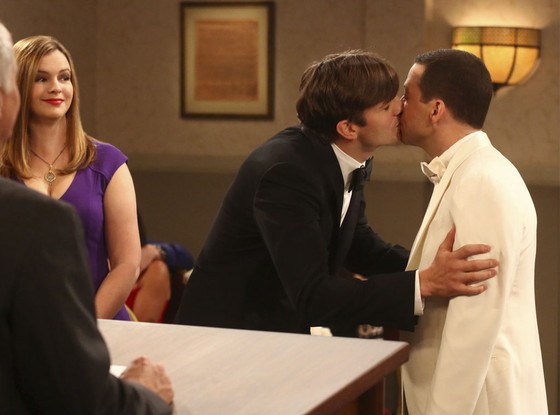
My post today is a way to direct your attention at something that is happening with the final season of Two and a Half Men. Two and a Half Men, for the most part, is a pretty raunchy show following raunchy people. It peddles cheap laughs with a slew of dirty jokes thrown at the audience at breakneck speeds. If there is any opening for a lowbrow joke, you better believe this show will take it. Originally starring Charlie Sheen as the drunken womanizer Charlie Harper (“HAHAHA KINDA LIKE THE REAL CHARLIE SHEEN HA!”), the show followed how his life was shaken up by the arrival of his deadbeat brother Alan Harper who is played by Jon Cryer. After Sheen was fired (thus ruining the integrity of Two and a Half Men for many viewers by sullying its proud name), Ashton Kutcher came aboard as Walden Schmidt, a tech-company billionaire bachelor. A few sitcom contrivances later, Walden has replaced Charlie as the person Alan is sponging off of as a deadbeat tenant. Now, after a few seasons of being with Alan, Walden decided his life was empty, so he decides to adopt a child. Because he can’t adopt a child as a single man, he needs to find someone he can marry quickly (and due to his unbelievably terrible experience with women), he has chosen to marry Alan who he can trust. This is where things get tricky.

Continue reading “Two and a Half Men’s Adoption Arc: A Surprisingly Thoughtful Story or a New Low?”

The Answer is Suffering

“You go to the movies to see people you love suffer-that’s why you go to the movies.”

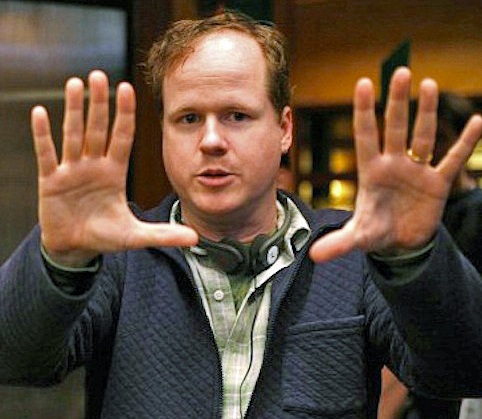
This is a quote from Joss Whedon, a writer, director, composer, and the crowned “Lord of the Nerds”. He is behind some of the biggest movie and TV franchises of all time (he directed The Avengers and created Buffy the Vampire Slayer), with several of his works developing dedicated cult followings. This is a striking quote that caused a lot of fans anticipating The Avenger‘s sequel to raise an eyebrow, and anyone whose watched Buffy, Angel, or some of his other shows should already have had some inclination that this was his mindset when it comes to creating stories. He kills character we love, he builds up hope for a certain thing to happen with the sole intent of shattering it, and he does not always provide us with happy endings. The most common criticism against Whedon is that he ventures too often into dark territory. That he relishes in cruelty for cruelty’s sake, and loves to punish his audience for loving his characters. I would argue that Whedon is doing the opposite of that, and that suffering is the key element in every story. By forcing characters to go through despair, he connects us with their world. Whedon isn’t punishing us for liking his characters, he is connecting the audience to their lives by sharing the most intimate thing they have: Their pain.

Continue reading “The Answer is Suffering”

The Immortal and the Antihero

“Is Buffy home yet?”

Antiheroes are sexy. They are roguish free spirits that take what they want, live for themselves, and always come out on top. They are unshackled by the chains of morality, and they don’t spout some crotchety evil agenda to everyone within earshot. At least, that’s how writers want you to see antiheroes. Antiheroes tend to be a lot of things, but mostly they are just stupid. I’m not saying the antihero as a concept is stupid, I am saying that how they have been portrayed has generally been ridiculous. People who do whatever they want without regard for any guiding principles are just assholes. When you slap on the moniker of “antihero”, they suddenly become acceptable as heroic figures, with assassins (people that murder for cash) often being portrayed as agents of justice. One of the things that made Breaking Bad so amazing was its ability to see through that bullshit. Walter White did the things most antiheroes are known for; he acted selfishly (as much as he’d like to deny it) and thought mostly of himself. Yet there was nothing glossy about the whole enterprise and the audience knew that because of how ugly things got for Walt by the end. While Breaking Bad’s Walter White taught us the ugly truth about antiheroes, Angel‘s “The Immortal” taught us to laugh at them.

Continue reading “The Immortal and the Antihero”

How to Spot a Troll

Spotting a troll is often difficult for people to do these days. Not because most trolls are skilled at concealing their identities, it’s more that people stopped being able to differentiate “troll” from “person I disagree with”. The general routine now is that there is some sort of consensus for a specific topic on a discussion board until someone comes in with a differing view, and that person is subsequently hit with inane and mindless troll accusations that now come in the form of the phrase “gr8 b8 m8 i r8 8/8”. This is a problem because now that the term “troll” can refer to essentially anyone, the phrase has lost all power and the once important task of troll slaying has become far more difficult. I’m here to try and clear it all up.

Continue reading “How to Spot a Troll”

The Conventions of Shipping

True despair awaits those who choose to “ship”. No, I am not talking about boating, I am referring to the fandom practice of “shipping” (as in relation-shipping) two characters together in hopes that they become a couple. At first it begins as innocently as anything, maybe a remark or two about how “perfect these two would be for each other”, but then it begins to creep into your thoughts. Eventually, you’ll suddenly find yourself consumed by the idea of two fictional characters falling in love with each other, pray that they will become “endgame” as the series concludes, and proudly declare them to be your OTP (One True Pairing) to anyone who is (or isn’t) listening. Conversely, you can become dedicated to the sinking of a ship, to hate one so completely that you’ll never miss a chance to insult it; since the two characters are “obviously wrong for each other” and no one else can see it. Shipping is a complex thing indeed, but perhaps the most interesting thing about it is why people enjoy doing it. The joy of having a ship of yours sail (become canon) is nothing compared to the joy you get wanting it to sail. The pain, the heartache, the despair, and the frustration are all things people truly enjoy out of the shipping experience. Like masochistic servants pleading for harsh admonishments from their master/mistress, shippers tend to flock to the most tumultuous of pairings, ones where the Will They/Won’t They dynamic doesn’t come off as a forgone conclusion.

Continue reading “The Conventions of Shipping”

Lost in a Pigeonhole: Where The Mentalist Went Wrong

The Mentalist is another in a long line of procedural dramas that mixes in serialized elements. Meaning, it has the usual “case-of-the-week” structure going, but it also puts in little pieces of a large overarching story-arc to go along with it. With The Mentalist specifically, we’d often get a a slew of random cases to solve, but every once in a while we’d get a case that would progress the show’s central mystery, and that would be catching Red John.

Continue reading “Lost in a Pigeonhole: Where The Mentalist Went Wrong”