In Your Opinion: A Guide to Arguing on the Internet

A cookie to anyone who recognizes the reference being made.

Arguing on the internet is an exercise in futility. No one wants to compromise, no one likes to lose, and admitting you’re wrong goes against one of the key pleasures of the internet: Anonymity. The knowledge that no one knows how you look or sound like is a hugely important factor in deciding what one is capable of saying. You are able to be as cool and confident as you wish you could be in real life, but when someone comes along to shatter that illusion, you can’t help but clutch onto that semblance of power as tightly as you can and this often materializes into what we call an “Internet Argument”. Internet arguments are often started by simple disagreements over petty things like movies or video games, but they are sustained by clashing egos. Eventually, way past the point where the argument should have been logically settled, individuals will continue to hurl progressively longer and longer posts until one person stops due to a mix of boredom and frustration. The “winner” for a lack of a better term, is the person who gets the last post in the argument, but after a certain point it starts to seem like everyone is the loser. The anxiety of checking if your opponent responded, the huge amount of time wasted cycling through repetitive arguments, and the knowledge that you’ll never have peace of mind until you’ve buried the “idiot” that disagrees with you is a situation one definitely should avoid. As a veteran arguer of the internet myself, I have a wealth of knowledge and experience I would like to impart to my dear readers that I’m sure will prove useful to you one day. As far as credentials go, I can tell you that I once spent a month arguing with the same person over two separate threads about whether or not “X anime character would beat X other anime character in a fight”. Eventually it got to the point where we would need to post 3 times in a row because there was a limit of 1000 words for a single post. Needless to say, even though I got the last word in, I did not feel like a winner at all. That’s why it’s important that you pay close attention to my first tip.

Continue reading “In Your Opinion: A Guide to Arguing on the Internet”
Don’t Let Sonic Boom Blast Away Chances for Story-Driven Games

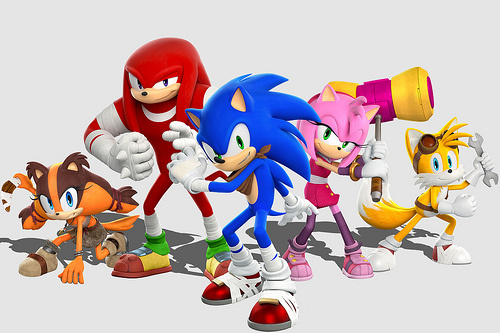
Currently, there’s a debate on whether or not story elements should be involved in certain gaming franchises. The question of whether or not Mario should be driven by something a bit more complex than a kidnapped princess is one that comes up often. One side argues that sticking to the same tried and true formula forever is the best way to go for these franchises, and if you want a deeper and more involving story from your videogames there’s always another series to enjoy. The other side claims that sometimes shaking up the formula for a series is the best way to move it forward or keep it fresh. Today I’m going to look at Nintendo, Sonic Boom: Rise of Lyric, and how they all relate back to that question of whether or not story-driven gaming experiences are what’s best for the player.

Continue reading “Don’t Let Sonic Boom Blast Away Chances for Story-Driven Games”

A Pause on Pregnancy

Let’s all talk about the pregnant elephant in the room. She feels bloated, she’s insecure, she’ll be extremely rude to her man at random intervals, and her hormones are making her crazy! Say hello to every pregnancy in popculture. At some point, writers everywhere decided that a particular pregnant woman must be the funniest thing ever since they all seem to write about the exact same one, and over the years it has become problematic. It’s not as if pregnancy can’t be funny (as it comes with a lot of inherently funny things like mood swings, being bloated like a balloon, and having insatiable cravings), but we have gotten to the point when the moment a woman in fiction says “I wanna have a baby/I-I’m pregnant” I groan in frustration. I do this because I’m in for some combination of certain things shown about pregnancy being exaggerated to the extreme that I’ve seen done a million times before.

Continue reading “A Pause on Pregnancy”

Nicolas Cage is Unquestionably Good

Recently, the question of whether or not Nicolas Cage is a good actor has come up frequently. Is he a legitimately good actor, a good actor in the “Tommy Wiseau” sense, a bad actor, or an actor that cannot be measured by any standard of quality as Dan Harmon’s Community recently suggested? Commonly cited in Cage-Theory is that he is either a good actor who suffered a Shyamalan-esque fall in grace due to a lack of consistency in his ability, or that his fall can be attributed to the tremendously poor roles he has chosen within the last decade. I find myself in the latter camp. The Wicker Man, Ghost Rider (1 and 2), The Sorcerer’s Apprentice, all of these films are unquestionably awful pieces of cinema that Cage happens to be a part of, and those are just a few I’ve named. There are countless other terrible Cage films that have been released in the past, and it looks like countless more are on the way as well. But when you stop to think about it, is that really a bad thing?

Continue reading “Nicolas Cage is Unquestionably Good”

Nitpicking Realism: When is it OK?

Ever find yourself annoyed with things that happen in a movie that you found to be “unrealistic”, or groan in frustration at someone who pointed out some obviously silly thing is in fact silly? Those are the conventions and consequences of nitpicking, which is basically a movie watching staple. But when is it OK, and when is it redundant? What is the line between legitimate criticism and a sad attempt to make yourself appear to be insightful? Here, I’ll briefly attempt to clear it up.

Continue reading “Nitpicking Realism: When is it OK?”

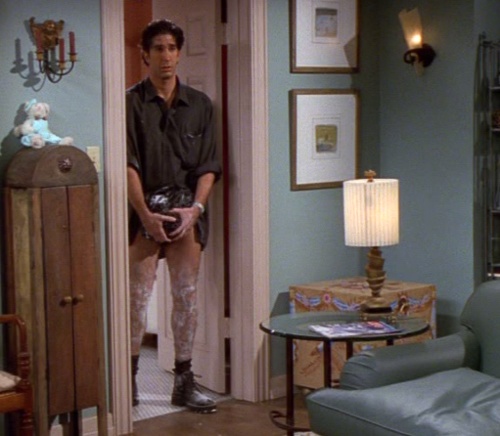
Ross: The Best and Worst Friend

It’s no secret that I am a pretty big Friends fan. Yes the show can be hokey, cheesy, and dumb sometimes. Yes the later seasons definitely looked to creak along with age a bit. But you know what? Screw anyone who tries to say this was an awful show. Friends changed sitcoms in a way that few sit-coms did before it. Friends was the show that identified the true strength of comedy, and that is the chemistry between the cast and the strength of the characters.  You can pair any of the 6 main cast members together and wring a story out of them consistently. Even now, over 10 years after the show ended and 20 years after it premiered, that is still really damn impressive. So I’m sure you’re all curious and waiting patiently to find out who I think is the best character in this dynamite cast that helped shape the landscape of sit-com history. And without question, the answer to that is Ross, but also know that if you were to ask me who I think is the worst friend the answer would be the same. Ross, just Ross.

Continue reading “Ross: The Best and Worst Friend”

The Greatest Commercial of All Time

This commercial is the single greatest ad on television. It’s from a series of Orkin pest control ads that feature walking, talking, and disturbing realistically textured pests trying to live in an unlucky family’s home. Instead of cartoony good guys and stereotypical bad guys of past ads of this type, these pests want nothing more than to live their victim’s house. That’s it. They don’t want to kill them, they don’t want to eat their kids or destroy their lives, they just want to live with them and nothing more. They fully capture the mentality of the real life counterparts to these little monsters by not making them outright malicious, but by just wanting to impose their presence where it is unwanted. These ads are very good at making it clear why someone would absolutely not want to have these pests anywhere near their home even if they aren’t strictly “evil” due to how god damn gross they appear. These commercial villains are closer to commercial anti-heroes if you ask me.

Continue reading “The Greatest Commercial of All Time”

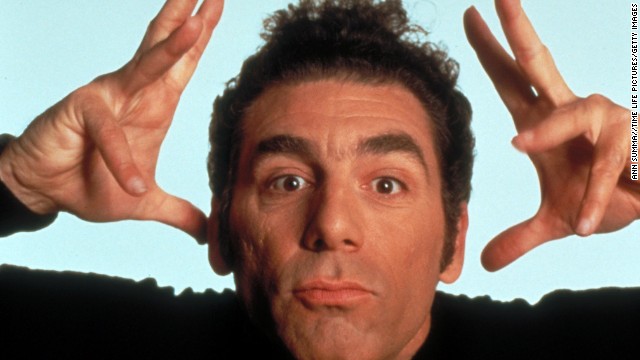
Michael Richard’s Ruinous Racist Rant Retrospective

Everyone remembers that awful rant Michael Richards had at the Laugh Factory comedy club back in 2006 that effectively ended his career. The short version is essentially a few black hecklers made him lose his temper and he launched into an explosive, and unambiguously focused racist tirade. I say “unambiguously” because most racist rants are scatter-shot uses of derogatory words wildly fired at their intended targets, Michael Richard’s rant on the other hand actually brought up the historical context for his hatred and used it as a weapon. As a result, his insistence that he isn’t actually racist come off as laughable, and his apologies to Jesse Jackson and Al Sharpton (as if they were the representatives of all black people) are just plain insulting.

Continue reading “Michael Richard’s Ruinous Racist Rant Retrospective”

No Schnitzel Sherlock: Three Dumb Things That Happened in the Finale

Fair warning to those reading, this post will contain a metric ton of spoilers on the third season (or series as it’s called here for some reason) of Sherlock. In it, I will discuss three absurdly stupid things that happened. If this sounds to you like it’s going to be an angry rant from some nerd who cares way too much about British TV shows, well congratulations on cracking the case there buddy, did Scoobs help you out with that one?

Did you enjoy that condescending tone I just addressed you with? Would it be more acceptable if I was British, played by a guy with an exceptionally dirty last name, and talked extremely quickly? No? Well that’s who you’re left with in BBC’s Sherlock. He’s rude, he’s annoying, he has zero emotional intelligence, but at least he’s  good at what he does right? At least he’s competent? He pretty much has to be, because otherwise, he’s just some arrogant tool that spouts nonsense… And that is exactly what he became in that dreadful finale. Here are 3 reasons why.

Continue reading “No Schnitzel Sherlock: Three Dumb Things That Happened in the Finale”