The Lion King 2 Was a Seriously Underrated Classic

The Lion King II: Simba’s Pride, the 1998 sequel to Disney’s The Lion King (something you may have heard about), was received poorly from critics. It happens to be another dreaded “Direct-to-DVD sequel” to a Disney film (a distinction that comes with the assumption that the product will be terrible), which probably gave a negative impression from the start, although the plot proved to be problematic as well. If the original Lion King was supposed to be a Disney retelling of Hamlet, this film would be its retelling of Shakespeare’s other supremely famous play, Romeo and Juliet. While its predecessor brought a fresh take on a timeless tale of fratricide, The Lion King 2 suffers from being highly derivative of other romantic stories. You have the outsider infiltrating our lead’s society for nefarious purposes only to end up falling in love with the person he was supposed to hurt and being forced between choosing between love and duty. There is nothing involving the romance between Simba’s daughter Kiara (Neve Campbell) and her boyfriend Kovu (Jason Marsden) that you won’t see coming, but the movie’s true strength lies in the story that is being told around them. Above all else, The Lion King II is a story about parenthood, and as a discussion on that subject this movie is very good.

Continue reading “The Lion King 2 Was a Seriously Underrated Classic”

That Shaman King Intro Though…

Too busy with finals and exams to give a proper update this week, but I can’t leave you all hanging can I? (Right now I’m imagining thousands of boys in girls at their computers constantly refreshing this site’s home page waiting for updates) This here is the intro to the English dub of the anime Shaman King. I don’t remember if the show was good, I don’t remember if the dub was well acted, and I sure as hell have no interest in exploring that now. What I do know is that as a kid, listening to this got me pumped up more than anything else that was on the air. The starting riff, the pitch perfect “kid show epic” lyrics, the colourful visuals… everything just comes together so perfectly. This song will change your life every time you see it, and it ages like a fine wine. It is my gift to anyone lucky enough to be reading this, so enjoy.

Disclaimer: I was also a huge fan of the One Piece rap intro despite disliking One Piece itself, so make of that what you will.

Outdated TV Episode Premises – Bob’s Burgers

A recent episode of Bob’s Burgers had me thinking about outdated episode premises in TV shows. The saying that writers tend to “write what they know” is true in a lot of ways, and nowhere is that more apparent than with writing children. When they write about the childhoods of their characters, they’re really projecting their own childhoods into their storytelling. That’s why they write about kids who get stuffed in lockers (which happens rarely these days since schools are far more crowded and lockers need to be smaller to fit), that’s why we watch kids actually call each other on their cellphones instead of just texting, and that’s why we see totally implausible plot lines like the one seen on the Bob’s Burgers episode “L’il Hard Dad”.

Continue reading “Outdated TV Episode Premises – Bob’s Burgers”

Terra Formars is an Obscenely Racist Manga and Anime Series… and it’s Sort of Hilarious

The most insidious kind of racism in media is the kind that exists just under the radar. The kind that’s loud enough to be heard, but not loud enough to be seen. Maybe the writing of a show happens to portray all Asian men as effeminate and ineffectual weaklings, perhaps all black characters in a movie just happen to be layabout brutes with no thoughts or original ideas of their own. Yes, racism in media is most potent when it’s hard to spot, yet is simultaneously clear as day. The racism in the manga and anime series Terra Formars by Yū Sasuga isn’t like that at all. There is no subtlety to it, it serves no discernible agenda, and is the purest form of stupid; however with that said, it’s also kind of hilarious.

The plot for this series is the age old “humanity screwed up the Earth” story. Centuries ago (which is the 21st century as this is a sci-fi series that takes place in the distant future), humans decided to try terraforming Mars in an effort to make it inhabitable in the event that the Earth stops being so. Part of the process involved sending roaches up there (since they apparently spread algae), and because this is a manga, those roaches have evolved into giant monsters. These super evolved roaches (known as terraformars, the manga’s namesake) are what I assume to be the most terrifying thing imaginable to your average manga reader…

Continue reading “Terra Formars is an Obscenely Racist Manga and Anime Series… and it’s Sort of Hilarious”

The Legend of Korra’s Weird and Wonderful Love Triangle

When people found out The Legend of Korra would focus on teenagers, they knew what it would result in. On some level I’m sure we all saw a lot of angst and heartache coming for these narcissistic little teenagers, and when it came, it brought out a mixed reaction (which is often the case with these things). The teens placed way too much stock on their romantic lives, they acted recklessly and selfishly, and none of them seemed to know what they really wanted… which is exactly like real teenagers. Trouble is, real teenagers have a habit of being infuriating. In the end, we received one of the most infamous romantic subplots of all time, and on an animated series no less. This one is going to be remembered for a long time because of the notoriously angsty behaviour these characters engage in, but also because of the unexpected and strangely fitting turns it takes. Before I discuss this particular love triangle though, its best to go over its players. We’ve got Korra (the show’s star), Mako (the original male lead), Asami (Korra’s chief romantic rival), and Bolin (a non-factor, but still worth mentioning).

The Original Love Triangle

Asami seeing the obvious

Continue reading “The Legend of Korra’s Weird and Wonderful Love Triangle”

BoJack Horseman’s Christmas Special is a Triumph in Writing

“And a Goober in a Pear Tree!”

And with that jovial line-reading, the entire spirit of the holidays, sitcoms, and manipulative Christmas themed episodes are encapsulated. The Netflix original series BoJack Horseman stars a misanthropic, washed up television star that is going through depression. Also he’s a horse. Because he was the star of a popular 90’s sitcom titled Horsin’ Around (which ran for 9 seasons), he essentially has an endless flow of money. In the world of BoJack Horseman, where the titular star has nothing but time, he finds himself to be lonely. For this reason, he allows this dead beat named Todd to live with him rent free. Todd is mostly this chipper weirdo that shamelessly mooches off BoJack’s hospitality, and while he does have a habit of being grating at times (much to BoJack’s annoyance) he is perfectly utilized here. Todd is just one of the elements this episode handles so well, since on the whole it is a masterstroke of comedy.

Continue reading “BoJack Horseman’s Christmas Special is a Triumph in Writing”

The Legend of Korra and the Problem With its Villains

Writing villains is hard. This is often a problem because in the plots of many stories, the characterization of the villain is the most important component and often what makes them compelling. In large scale and themed stories, villains act as cautionary tales, tools writers use to help teach an important lesson in their stories. Within the world of the TV shows Avatar: The Last Airbender and its successor The Legend of Korra, villains largely fall into the role of “teachers”. They would take a certain ideology way too far and the audience and the characters in the story would come to understand the flaws in their thinking through their failure. Despite generally (and rightly) being regarded as a masterpiece though, The Last Airbender did not have many truly great villains. There was the ambitious Admiral Zhao of the first season who was held back by a level of patheticness that overshadowed the rest of his character, and there was the much talked about Fire Lord Ozai who was suitably cruel and unpleasant but also surprisingly generic (which is odd if you consider the fact that he was a character that was built up since the beginning of the series). The writers struck lightning (ha) when they created Azula, the chief antagonist of the second season, and the only compelling antagonist that remained after Zuko officially joined the side of the heroes (for real) in the third season. To put it bluntly, Azula was a stone cold bad ass, but at the same time she was the most developed and complex villain in the original series. The approach to developing Azula was definitely under a “less is more” philosophy, with little hints about her mental state being given here and there, and with the writers leaving a lot of things for the viewers to figure out. It was very intelligently done, and for those who were paying attention, it paid off big time in the finale with a powerful message about forming connections through love rather than fear. Unfortunately, most subsequent villains in the Avatar franchise started following Azula’s example in the “less is more” style of development, and eventually it was morphed into “less for the sake of less”. The precarious balance that was present for Azula’s development was lost. All the pieces are there, but the development never follows through. I’ve already discussed where Ozai went wrong (quick recap: he was surprisingly shallow), but what about the Korra villains?

Continue reading “The Legend of Korra and the Problem With its Villains”

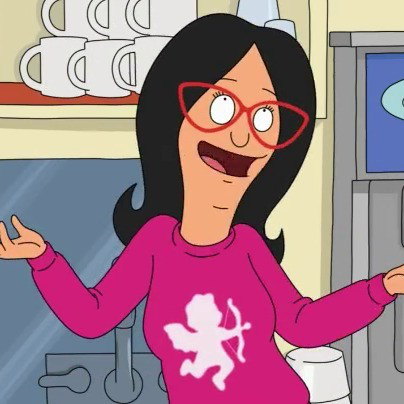
Linda Belcher is the Best Sitcom Wife

Alriiiight, let’s talk about sitcom wives. The general role they’ve had all the way back since The Honeymooners was to be the voice of reason to balance out the craziness their husbands bring each week. The husband does something impulsive, the wife tells him how stupid it is to have done that. The husband wants to do something fun and irresponsible, the wife is always there to stop him. This is how it is, and it made sense for a while. Long ago, women were always seen as less intelligent and less capable than men, so in order to subvert that sitcom writers decided it’d be cool to to portray women as the smart and responsible ones married to men who are less intelligent and immature. Unfortunately this stuck long after people needed to be reminded that women are just as intelligent and capable as men, and what we have now is so much worse as a result. Leading women in comedy these days are worse than idiots, worse than flighty numbskulls, and worse than any diva brat the misogynist writers of old could possibly cook up. Women in comedy today are buzz kills. They’re here to tell their family to not do this or that, and to act like some lame authority figure that must be reported to or else they’ll nag. How many times do we see Homer desperately trying to appease Marge for disobeying her wishes to not do whatever dumb and irresponsible thing he did that week? How many times did we hear sitcom dads use the phrase “If my wife finds out, she’s going to kill me”? The answer to both those questions is “far too many times”. Recently however, there has been a shift. To balance out their nagginess, writers have taken to giving sitcom wives “crazy” quirks or weaknesses where they act out of character to show that they can be funny too. Unfortunately it just comes off as a hollow attempt to invigorate the most boring character on their show. Linda Belcher of Bob’s Burgers however is different. She can be “crazy”, and fun, and be a loving mom and still stay true to her character. It’s an impressive feat, but it’s also a trick only this show can pull off.

Continue reading “Linda Belcher is the Best Sitcom Wife”