The Immortal and the Antihero

“Is Buffy home yet?”

Antiheroes are sexy. They are roguish free spirits that take what they want, live for themselves, and always come out on top. They are unshackled by the chains of morality, and they don’t spout some crotchety evil agenda to everyone within earshot. At least, that’s how writers want you to see antiheroes. Antiheroes tend to be a lot of things, but mostly they are just stupid. I’m not saying the antihero as a concept is stupid, I am saying that how they have been portrayed has generally been ridiculous. People who do whatever they want without regard for any guiding principles are just assholes. When you slap on the moniker of “antihero”, they suddenly become acceptable as heroic figures, with assassins (people that murder for cash) often being portrayed as agents of justice. One of the things that made Breaking Bad so amazing was its ability to see through that bullshit. Walter White did the things most antiheroes are known for; he acted selfishly (as much as he’d like to deny it) and thought mostly of himself. Yet there was nothing glossy about the whole enterprise and the audience knew that because of how ugly things got for Walt by the end. While Breaking Bad’s Walter White taught us the ugly truth about antiheroes, Angel‘s “The Immortal” taught us to laugh at them.

Continue reading “The Immortal and the Antihero”

How to Spot a Troll

Spotting a troll is often difficult for people to do these days. Not because most trolls are skilled at concealing their identities, it’s more that people stopped being able to differentiate “troll” from “person I disagree with”. The general routine now is that there is some sort of consensus for a specific topic on a discussion board until someone comes in with a differing view, and that person is subsequently hit with inane and mindless troll accusations that now come in the form of the phrase “gr8 b8 m8 i r8 8/8”. This is a problem because now that the term “troll” can refer to essentially anyone, the phrase has lost all power and the once important task of troll slaying has become far more difficult. I’m here to try and clear it all up.

Continue reading “How to Spot a Troll”

The Conventions of Shipping

True despair awaits those who choose to “ship”. No, I am not talking about boating, I am referring to the fandom practice of “shipping” (as in relation-shipping) two characters together in hopes that they become a couple. At first it begins as innocently as anything, maybe a remark or two about how “perfect these two would be for each other”, but then it begins to creep into your thoughts. Eventually, you’ll suddenly find yourself consumed by the idea of two fictional characters falling in love with each other, pray that they will become “endgame” as the series concludes, and proudly declare them to be your OTP (One True Pairing) to anyone who is (or isn’t) listening. Conversely, you can become dedicated to the sinking of a ship, to hate one so completely that you’ll never miss a chance to insult it; since the two characters are “obviously wrong for each other” and no one else can see it. Shipping is a complex thing indeed, but perhaps the most interesting thing about it is why people enjoy doing it. The joy of having a ship of yours sail (become canon) is nothing compared to the joy you get wanting it to sail. The pain, the heartache, the despair, and the frustration are all things people truly enjoy out of the shipping experience. Like masochistic servants pleading for harsh admonishments from their master/mistress, shippers tend to flock to the most tumultuous of pairings, ones where the Will They/Won’t They dynamic doesn’t come off as a forgone conclusion.

Continue reading “The Conventions of Shipping”

Lost in a Pigeonhole: Where The Mentalist Went Wrong

The Mentalist is another in a long line of procedural dramas that mixes in serialized elements. Meaning, it has the usual “case-of-the-week” structure going, but it also puts in little pieces of a large overarching story-arc to go along with it. With The Mentalist specifically, we’d often get a a slew of random cases to solve, but every once in a while we’d get a case that would progress the show’s central mystery, and that would be catching Red John.

Continue reading “Lost in a Pigeonhole: Where The Mentalist Went Wrong”

In Your Opinion: A Guide to Arguing on the Internet

A cookie to anyone who recognizes the reference being made.

Arguing on the internet is an exercise in futility. No one wants to compromise, no one likes to lose, and admitting you’re wrong goes against one of the key pleasures of the internet: Anonymity. The knowledge that no one knows how you look or sound like is a hugely important factor in deciding what one is capable of saying. You are able to be as cool and confident as you wish you could be in real life, but when someone comes along to shatter that illusion, you can’t help but clutch onto that semblance of power as tightly as you can and this often materializes into what we call an “Internet Argument”. Internet arguments are often started by simple disagreements over petty things like movies or video games, but they are sustained by clashing egos. Eventually, way past the point where the argument should have been logically settled, individuals will continue to hurl progressively longer and longer posts until one person stops due to a mix of boredom and frustration. The “winner” for a lack of a better term, is the person who gets the last post in the argument, but after a certain point it starts to seem like everyone is the loser. The anxiety of checking if your opponent responded, the huge amount of time wasted cycling through repetitive arguments, and the knowledge that you’ll never have peace of mind until you’ve buried the “idiot” that disagrees with you is a situation one definitely should avoid. As a veteran arguer of the internet myself, I have a wealth of knowledge and experience I would like to impart to my dear readers that I’m sure will prove useful to you one day. As far as credentials go, I can tell you that I once spent a month arguing with the same person over two separate threads about whether or not “X anime character would beat X other anime character in a fight”. Eventually it got to the point where we would need to post 3 times in a row because there was a limit of 1000 words for a single post. Needless to say, even though I got the last word in, I did not feel like a winner at all. That’s why it’s important that you pay close attention to my first tip.

Continue reading “In Your Opinion: A Guide to Arguing on the Internet”

Don’t Let Sonic Boom Blast Away Chances for Story-Driven Games

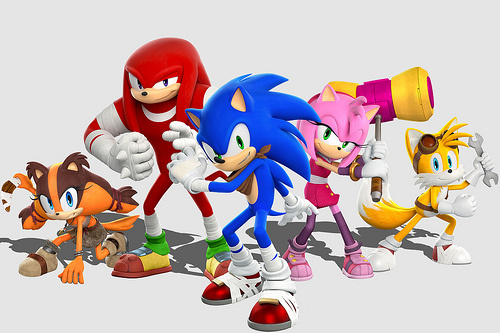
Currently, there’s a debate on whether or not story elements should be involved in certain gaming franchises. The question of whether or not Mario should be driven by something a bit more complex than a kidnapped princess is one that comes up often. One side argues that sticking to the same tried and true formula forever is the best way to go for these franchises, and if you want a deeper and more involving story from your videogames there’s always another series to enjoy. The other side claims that sometimes shaking up the formula for a series is the best way to move it forward or keep it fresh. Today I’m going to look at Nintendo, Sonic Boom: Rise of Lyric, and how they all relate back to that question of whether or not story-driven gaming experiences are what’s best for the player.

Continue reading “Don’t Let Sonic Boom Blast Away Chances for Story-Driven Games”

A Pause on Pregnancy

Let’s all talk about the pregnant elephant in the room. She feels bloated, she’s insecure, she’ll be extremely rude to her man at random intervals, and her hormones are making her crazy! Say hello to every pregnancy in popculture. At some point, writers everywhere decided that a particular pregnant woman must be the funniest thing ever since they all seem to write about the exact same one, and over the years it has become problematic. It’s not as if pregnancy can’t be funny (as it comes with a lot of inherently funny things like mood swings, being bloated like a balloon, and having insatiable cravings), but we have gotten to the point when the moment a woman in fiction says “I wanna have a baby/I-I’m pregnant” I groan in frustration. I do this because I’m in for some combination of certain things shown about pregnancy being exaggerated to the extreme that I’ve seen done a million times before.

Continue reading “A Pause on Pregnancy”

Nicolas Cage is Unquestionably Good

Recently, the question of whether or not Nicolas Cage is a good actor has come up frequently. Is he a legitimately good actor, a good actor in the “Tommy Wiseau” sense, a bad actor, or an actor that cannot be measured by any standard of quality as Dan Harmon’s Community recently suggested? Commonly cited in Cage-Theory is that he is either a good actor who suffered a Shyamalan-esque fall in grace due to a lack of consistency in his ability, or that his fall can be attributed to the tremendously poor roles he has chosen within the last decade. I find myself in the latter camp. The Wicker Man, Ghost Rider (1 and 2), The Sorcerer’s Apprentice, all of these films are unquestionably awful pieces of cinema that Cage happens to be a part of, and those are just a few I’ve named. There are countless other terrible Cage films that have been released in the past, and it looks like countless more are on the way as well. But when you stop to think about it, is that really a bad thing?

Continue reading “Nicolas Cage is Unquestionably Good”

Nitpicking Realism: When is it OK?

Ever find yourself annoyed with things that happen in a movie that you found to be “unrealistic”, or groan in frustration at someone who pointed out some obviously silly thing is in fact silly? Those are the conventions and consequences of nitpicking, which is basically a movie watching staple. But when is it OK, and when is it redundant? What is the line between legitimate criticism and a sad attempt to make yourself appear to be insightful? Here, I’ll briefly attempt to clear it up.

Continue reading “Nitpicking Realism: When is it OK?”

Ross: The Best and Worst Friend

It’s no secret that I am a pretty big Friends fan. Yes the show can be hokey, cheesy, and dumb sometimes. Yes the later seasons definitely looked to creak along with age a bit. But you know what? Screw anyone who tries to say this was an awful show. Friends changed sitcoms in a way that few sit-coms did before it. Friends was the show that identified the true strength of comedy, and that is the chemistry between the cast and the strength of the characters.  You can pair any of the 6 main cast members together and wring a story out of them consistently. Even now, over 10 years after the show ended and 20 years after it premiered, that is still really damn impressive. So I’m sure you’re all curious and waiting patiently to find out who I think is the best character in this dynamite cast that helped shape the landscape of sit-com history. And without question, the answer to that is Ross, but also know that if you were to ask me who I think is the worst friend the answer would be the same. Ross, just Ross.

Continue reading “Ross: The Best and Worst Friend”