That Shaman King Intro Though…

Too busy with finals and exams to give a proper update this week, but I can’t leave you all hanging can I? (Right now I’m imagining thousands of boys in girls at their computers constantly refreshing this site’s home page waiting for updates) This here is the intro to the English dub of the anime Shaman King. I don’t remember if the show was good, I don’t remember if the dub was well acted, and I sure as hell have no interest in exploring that now. What I do know is that as a kid, listening to this got me pumped up more than anything else that was on the air. The starting riff, the pitch perfect “kid show epic” lyrics, the colourful visuals… everything just comes together so perfectly. This song will change your life every time you see it, and it ages like a fine wine. It is my gift to anyone lucky enough to be reading this, so enjoy.

Disclaimer: I was also a huge fan of the One Piece rap intro despite disliking One Piece itself, so make of that what you will.

Guilty Pleasure Tropes

Ever watch something that you know you should hate for various reasons (that usually include being the fact that it’s stupid as all hell), but you enjoy the hell out of it anyways? That’s what most would describe as a guilty pleasure, and just about everyone seems to have one in the form of a movie, TV Show, game, or book. Maybe it’s considered a “guilty” pleasure for you because it advocates an ideological stance you’re totally apposed to, maybe it’s something that people you just don’t like identify with, and perhaps it’s just stupid as mentioned earlier, but all of these guilty pleasures are comprised of guilty pleasure tropes. Things that many GP’s have in common, a way to immediately let the viewer know what they’re getting into. In this post, I’m going to highlight 3 of my favourite tropes and explain why they’re just as “right” as they are wrong.

Continue reading “Guilty Pleasure Tropes”

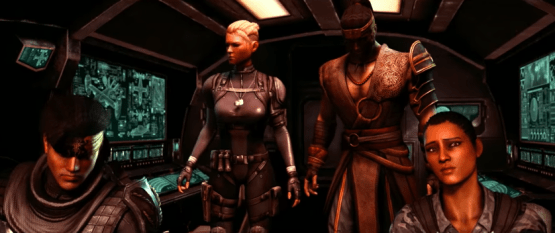
Fighting Game Narratives – Mortal Kombat X’s Story And Why They Matter

The phrase “Fighting games with story” can inspire a number of reactions from people. To the general public, it just sounds like another aspect to a genre of video games they may or may not have an interest in, but to fans of fighting games its a phrase that generates revulsion, aggressive apathy, support, ridicule, or outright anger. It seems like everyone in the fighting game community has some kind of opinion on story modes in their games, and all of them revolve around how relevant they are.

Continue reading “Fighting Game Narratives – Mortal Kombat X’s Story And Why They Matter”

Outdated TV Episode Premises – Bob’s Burgers

A recent episode of Bob’s Burgers had me thinking about outdated episode premises in TV shows. The saying that writers tend to “write what they know” is true in a lot of ways, and nowhere is that more apparent than with writing children. When they write about the childhoods of their characters, they’re really projecting their own childhoods into their storytelling. That’s why they write about kids who get stuffed in lockers (which happens rarely these days since schools are far more crowded and lockers need to be smaller to fit), that’s why we watch kids actually call each other on their cellphones instead of just texting, and that’s why we see totally implausible plot lines like the one seen on the Bob’s Burgers episode “L’il Hard Dad”.

Continue reading “Outdated TV Episode Premises – Bob’s Burgers”

A Contradiction Between Heroism and Human Society: The Adventures of Tom Sawyer and the Flaws of Human Nature

The Adventures of Tom Sawyer, a nineteenth century novel by Mark Twain, is at its core a Bildungsroman; a story that focuses on the mental and spiritual growth—the coming of age, of the protagonist from his or her youth into his or her maturation. In the case of Twain’s novel, the titular Tom Sawyer is taken on a journey that sees him go from an immature child to a young man capable of making rational decisions. Tom’s unruly nature sends him (and those he drags along with him) through a series of increasingly dire situations that provide him with opportunities to define himself as a person throughout. As Tom travels deeper and deeper into darkness (both literally and metaphorically), he comes to gain understanding in a world where others constantly seek to fill his head with their flawed conceptions. Eventually, Tom comes to embody the traits of what Twain defines as a hero. Through Tom’s adventures, readers come to understand that heroism manifests when people diverge from group human behaviour and focus on what they as individuals have to offer. Through overcoming society’s conception of what it means to be human, Tom is able to achieve a greatness and heroism that is independent of what others expect of him.

Continue reading “A Contradiction Between Heroism and Human Society: The Adventures of Tom Sawyer and the Flaws of Human Nature”

Terra Formars is an Obscenely Racist Manga and Anime Series… and it’s Sort of Hilarious

The most insidious kind of racism in media is the kind that exists just under the radar. The kind that’s loud enough to be heard, but not loud enough to be seen. Maybe the writing of a show happens to portray all Asian men as effeminate and ineffectual weaklings, perhaps all black characters in a movie just happen to be layabout brutes with no thoughts or original ideas of their own. Yes, racism in media is most potent when it’s hard to spot, yet is simultaneously clear as day. The racism in the manga and anime series Terra Formars by Yū Sasuga isn’t like that at all. There is no subtlety to it, it serves no discernible agenda, and is the purest form of stupid; however with that said, it’s also kind of hilarious.

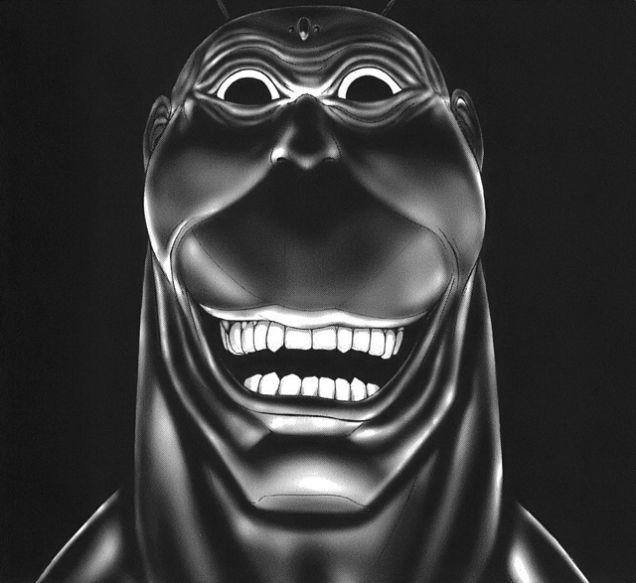
The plot for this series is the age old “humanity screwed up the Earth” story. Centuries ago (which is the 21st century as this is a sci-fi series that takes place in the distant future), humans decided to try terraforming Mars in an effort to make it inhabitable in the event that the Earth stops being so. Part of the process involved sending roaches up there (since they apparently spread algae), and because this is a manga, those roaches have evolved into giant monsters. These super evolved roaches (known as terraformars, the manga’s namesake) are what I assume to be the most terrifying thing imaginable to your average manga reader…

Continue reading “Terra Formars is an Obscenely Racist Manga and Anime Series… and it’s Sort of Hilarious”

Some Thoughts on the Batgirl Variant Cover Featuring The Joker

Recently, this variant cover of Batgirl #41 by Rafael Albuquerque has been making waves on the internet, and it’s clear why at first glance. Even without understanding the deeper meaning behind the imagery, it’s easy to understand why so many feel this cover is misogynistic. This is a chilling piece of artwork, and something everyone agrees on is the fact that it was exceptionally well drawn. On a surface level, this is a creepy picture of the Joker victimizing Batgirl, but to those who have read the seminal Alan Moore graphic novel, The Killing Joke, the imagery carries a decidedly darker tone. For those that don’t know, during the events of The Killing Joke, the Joker approaches the Gordon household, rings the doorbell, and when Barbara Gordon (Batgirl’s secret identity) answers the door, he shoots her through the spine (an act that paralyzes her and nearly ends her crime fighting career). Afterwards, he has his men capture her father, the police commissioner Jim Gordon. In a plot to drive Jim insane, the Joker strips a bleeding Barbara, snaps pictures of her naked body, and leaves her to die on his way to show those same pictures to her father (who is also to be stripped and degraded in a horrific sequence of events); all while wearing that tonally inappropriate tourist outfit he is sporting in that cover. It is one of the most striking and horrific moments in comic book history, and it is what the artwork above is harkening back to.

Continue reading “Some Thoughts on the Batgirl Variant Cover Featuring The Joker”

Retro Review: Batman #1 (1940) – “The Joker” / “The Joker Returns”

Oh wow, I never realized how fully realized the Joker was from his first appearance. This was a really interesting read, thanks!

Reid Vanier's avatarModern Mythologies

Retro Review takes a look at influential issues of DC Comics and measures their artistic integrity against their cultural and symbolic importance to the DC Universe and comic books in general.

Batman 1

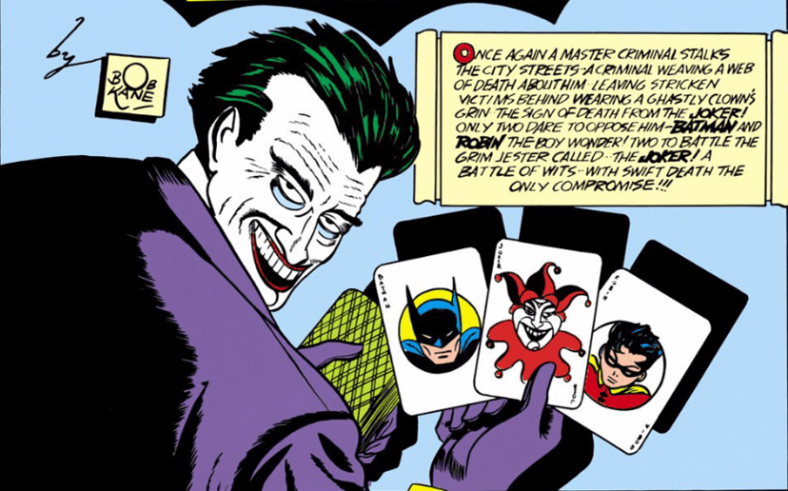
While last year marked the 75th anniversary of the Batman, this year mark’s the 75th anniversary of the debut of the Dark Knight’s self-titled solo series. Batman was one of the longest running continuous comic book series of all time, but more importantly, it was the series that introduced two of the most important and iconic characters in the Batman mythos.

One of these was Catwoman, the master thief and long-time paramour of the Caped Crusader. We will be covering her debut later on this year as part of her own 75th birthday celebration. But for today, we focus on the debut of Batman’s most iconic villain: his unrivaled archenemy, the Joker – otherwise known as the Clown Prince…

View original post 2,262 more words

Batman: Death of the Family Review

Scott Snyder’s Batman: Death of the Family is one of the most ambitious Batman stories I’ve ever read. It is one that seeks to make a definitive statement about Batman’s relationship with his arch-foe and it succeeds in doing so in a way that was never done before. The attention to detail and the obvious reverence Snyder has for the source material is palpable. The Joker is simultaneously at his most loving and deranged in this horror story as he takes Batman down memory lane and makes a serious effort in emphasizing why their relationship is so important, and why the one he has with his supposed family is the part of Bruce’s life that truly needs to be destroyed. The characterization of the Joker in particular is what proves to be both this story’s greatest strength and weakness.

Continue reading “Batman: Death of the Family Review”